
Bookscan is a Mess

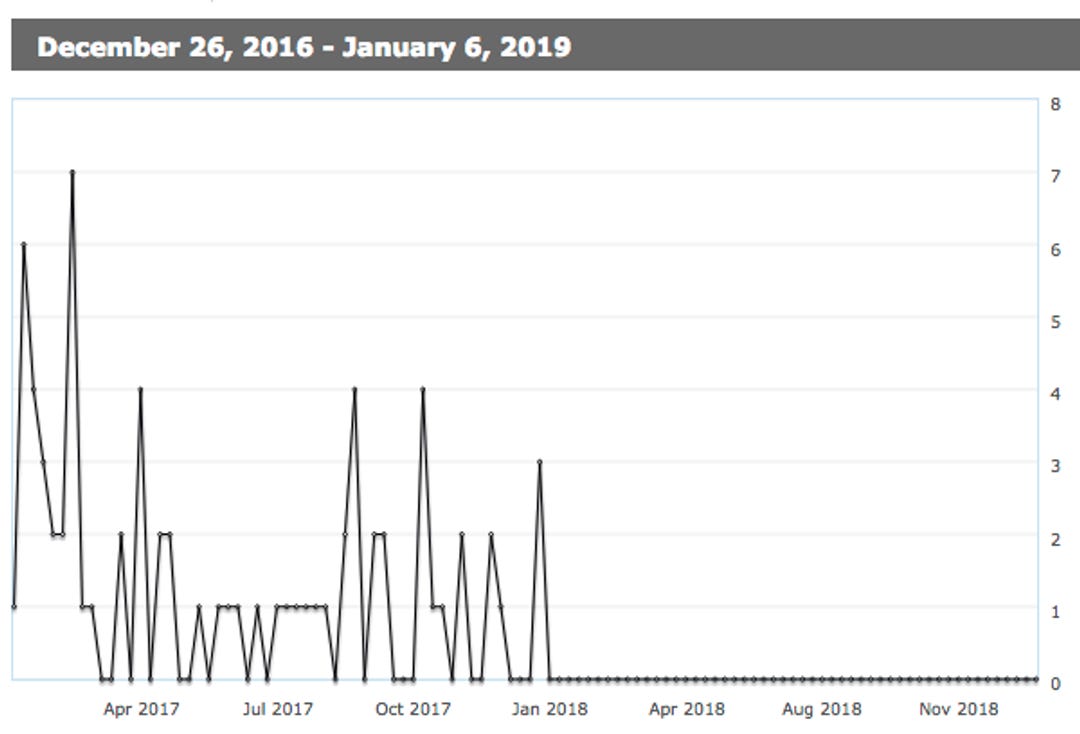
You’re looking at sales metrics on one of my graphic novels. I’m using old metrics because I don’t want people to be able to track, and my publishers might not appreciate proprietary info getting out there.
This is a depressing sales metric which shows absolutely no sales over the past year on one of my evergreen trade paperbacks. This metric comes from a service called Bookscan.
This chart is not even remotely accurate. Bookscan shows no sales on a book for an entire year, a period during which I received royalty payments. You don’t get royalties on things that don’t sell.
Now, these aren’t huge sales, and I only made about enough money to pay for a month’s groceries on this, so again, not getting rich. This book has been in print over a decade and only recently earned out enough to start paying royalties, so yay for that at least. But here are screen shots of the sales figures for GN editions during periods which Bookscan claims books have not sold at all.


Less than 1000 copies sold in one year, but that’s a bigger number than ZERO, or the 50 or so copies Bookscan claims we sold in 2017. Also, 650 is a pretty good long tail sales metric for a decade-plus old book.
The publishing industry relies heavily on Bookscan data. In 2013, I wrote a critical article about the service on my old (now down) blog. It went viral, getting quite a lot of commentary, and ended up being the subject of an article on the Forbes magazine website.
When I first wrote the article, the blogger at Comicsbeat called me up to tell me she agreed with my assessment, but could not possibly blog about it herself because her blog was published by Publisher’s Weekly which was owned by Nielson, which owns Bookscan. After about two weeks, she blogged it anyway. Comicsbeat is published by someone else now, but whatever.
Publishing decisions are made based on what Bookscan metrics show. And if Bookscan shows no sales, publishers assume your books are not worth signing on. These metrics can help sink a reputation and a career.
Smear tactics are employed by bad actors who trawl through Comichron (an online comics sales metric,) to get the numbers on comics and graphic novels they then use to throw dirt at creators by claiming their work has no merit. If the sales on Comichron are low, you suck as a creator.
But the sales figures on Comichron are estimates that only cover the direct market. They don’t show sales outside the comic book direct market framework. And they’re educated guesses. Comichron doesn’t have access to proprietary sales information.
But even with Bookscan, a service only accessible by authors and professional subscribers, the real numbers are still way off.
Some people are making decent money (and a few are making good money) moving their independent projects with crowdfunding, claiming the mainstream is dying and the audience isn’t there to support big company comics anymore.
I’m not seeing this at all.
I’m seeing indie projects, none of which have been able to pull in 10,000 customers per title. And there is nothing wrong with that. If I had 5,000 GN sales on A DISTANT SOIL, I’d be dancing in the streets.
But the argument is that the comics industry is dying, and this is based on bad numbers that claim these indie books are selling better than big name titles. It’s simply not true. I mean, there are a few indie books that have sold more than some totally dud big company books, but it’s simply not the norm. And of the indie books making this claim, the biggest selling of them didn’t top 8000 customers.
That’s about what A DISTANT SOIL’s sales dropped to when I started to panic because I wasn’t sure how long circulation that low would be sustainable. All before crowdfunding, of course. If your sales are that low, your price point has to be high to sustain it. And the audience will not sustain it forever.
Anyway, I see the actual numbers on my books, not someone’s guesses and as I’ve demonstrated in previous posts, publishers monetize an enormous backlist for endless profits.
While I have not been nearly as prolific and popular a mainstream creator as some of my colleagues, my royalty statements show more than 75 of my books and comics are being sold as backlist.
One of my colleagues, someone with a very long history in comics (and he’s more popular than me,) told me he makes $30,000-$40,000 per year on these royalties.
You saw what my royalty statements are composed of: often tiny payments of no more than a few cents per book.
How many of those books does he have to sell to make $30,000-$40,000 per year?
This man has been advising me to clear out of comics since the day I met him. “Comics is dying. Comics won’t be around in ten years. What’s your back up?”
He admits he was wrong now. He expects comics to be here for a long time.
The one thing that could happen (and has been widely discussed among creators for some time,) is the easy backlist money could become so profitable the publishers could cut the far more expensive frontlist to the bone -or cut it out entirely - relying solely on old comics to fuel the merchandise and movie machine. There was a period in the 1970’s when there was a high volume of reprint collections bringing in easy company cash.
I sincerely doubt that new material will be cut out entirely, but the incentive to push for original works lessens considerably when the old stuff pays so well.
The only issue I can see with the idea that backlist reprints could supplant the frontlist is that the frontlist is what keeps new people coming into comics, especially younger readers. Buying single issues is still a reasonable risk when disposable income is at a premium and you don't know what you like yet. It's only after experimenting with a selection and figuring out that you prefer Those Annoying Post Bros to Batman that those readers will risk getting caught up in backlist collections, if only because there is SO MUCH. (I've watched new readers absolutely paralyzed when facing big compilations of reprints, because they don't know where to start. Which version of Justice League? How far back do you want to go and how many can you afford to get up to speed on the Fantastic Four? Which collections are complete and reprinted from original art, and which ones were practically mimeographed? And the biggest question of all: the balance between completism and burnout?)
Imagining Bookscan as a poll with margin of error… nah.
Imagining Bookscan as a sticky trap for pest monitoring.
“First week of March: One Codling Moth found in sticky trap. Second week of March: Two Codling Moth. And a Batman comic flew in.”
“Could be time to spray the orchard. Oh, and update Comics BizJournazine on the direct market sales of Batman. Also: these comics are messing with our core BugScan business, can we somehow zero them out?”