
A Reply
About that art school scam...

I wrote this as a reply to a post about expensive art schools awhile back, but I think it deserves a highlight. I’ve also edited and updated it.
I'm really glad you had a good experience at art school. I REALLY am. I know a lot of people who enjoyed their time at college.
But going to a good art school when you have the maturity to make the informed choice, money, and time, as you did when you were well into adulthood, is not the same thing as making that choice as a hopeful teenager or a lower class aspirant, and getting stuck with a six figure debt from a diploma mill that lies to you about what benefit you will derive from the curriculum and has you sign a predatory loan...which is the point of this article.
IF you get into a good school and IF you can afford it, and IF it works out, then great. I'm sure people who went to Harvard and got tony jobs afterward aren't complaining about how much it cost to go there now.
I'd have loved to have had the money to go to a fine atelier. Then I wouldn't have spent years trying to suss out how to paint in oils on my own.
Unfortunately, I didn't have the money.
But clearly, some schools are defrauding the public.
If art schools (or any schools) are willing to take anyone who applies, drain them financially, and give them no useful skills, then they're not doing anyone any service, either materially or spiritually. They are destroying the financial stability of the young people of this country via fraud.
Seriously, how many people taking photography courses, graphic design courses, and gaming design courses can expect to graduate from all the art schools around this country per annum and expect to be employed in their field when they get out?
Art schools claim over 70% of their students become working artists. But the reality is about 10% of those who study art become working artists.
And yet, only 16% of working artists have degrees. https://bfamfaphd.com/wp-content/uploads/2016/05/BFAMFAPhD_ArtistsReportBack2014-10.pdf
Being able to go to an expensive school and not really have to get a (material) return on the investment is a luxury many simply can't afford. It’s nice to assert that school broadens your mind, but I don’t believe that the average person can afford $120,000 to pay to be told what you can learn from an inexpensive or free online course with nothing but personal incentive to guide you.
I mean, I watch historical biographies all day while drawing comics and I will never need to use this information about Edna St Vincent Millay, but I went out and had a go at finding out on my own. No one told me to do it. I didn’t have to pay to get it.
I taught myself more as a child by the age of 16 (and was a professional artist by that age) than anyone in those schools could teach me.
"Ultimately, you live or die on the page".
OK, but most of the people in comics of my generation had no higher education in this field at all, and were successful in it without $100,000 worth of schooling.
It is a fact you can create comics successfully without investing in expensive art schools, and art schools are a luxury item most people can't afford.
I'm glad you don't want to live in regrets.
But did you ruin your family's credit and future well being with a student loan that gave you no return on the investment in your education?
I'm thinking, no.
FWIW, I went to an online school recently that I think is very good. Instead of costing me $100,000, I took the video courses I wanted for about $550 per annum.
And I learned more in a half hour there than I learned after some months and thousands of dollars at The Art Institutes…
Which were shut down for massive diploma mill fraud. And from which I got a refund.
I also enjoy many videos on Youtube that are free, from James Gurney to more extensive classes like Florent Farges, with his free oil painting lectures. You can also join his in-depth classes for only $2.99 a month.
In my humble and possibly unpopular opinion, the artists most likely to succeed don’t need art school, and the biggest benefit to art school is social and professional connection. These benefits did not exist when I was a young cartoonist, because comics and art school did not go together in ancient days.
Comics was art and social suicide.
The artists most likely to succeed have such relentless internal focus and drive you’d need to hit them in the head with a mallet to keep them from seeking and learning what they need to know.
And the rest think there’s some sort of magic pill of knowledge that gatekeepers are holding from them and if they just drop a big wad of dough, the magic pill of knowledge will appear and change their life.
While I have no doubt that higher education is great for some, it is a fricking luxury for most.
And for many artists, there is simply no lasting benefit.
If given the choice between the big university or the private atelier at a fraction of the price, I’d choose the private atelier any time.
And if you can’t have that, the right online school is out there, affordable at almost any budget.
But if you’re going past youtube and looking for an actual online school, try to find one with teachers who are not afraid to be fired if they criticize their students. I see so many online teachers dancing around what they need to say for fear of losing a subscription.
You’re not being done any favors by being infantalized and wrapped in cotton wool. Sometimes the hard truth needs to be said. Get a teacher who’s honest and not worried about their $20 fee.
Of course, a lot of these Youtubers make me gag, they are SO bad. But I am not going to take the time to talk about what I don’t like. I will try to seek out more online resources I do like.
That’s all.
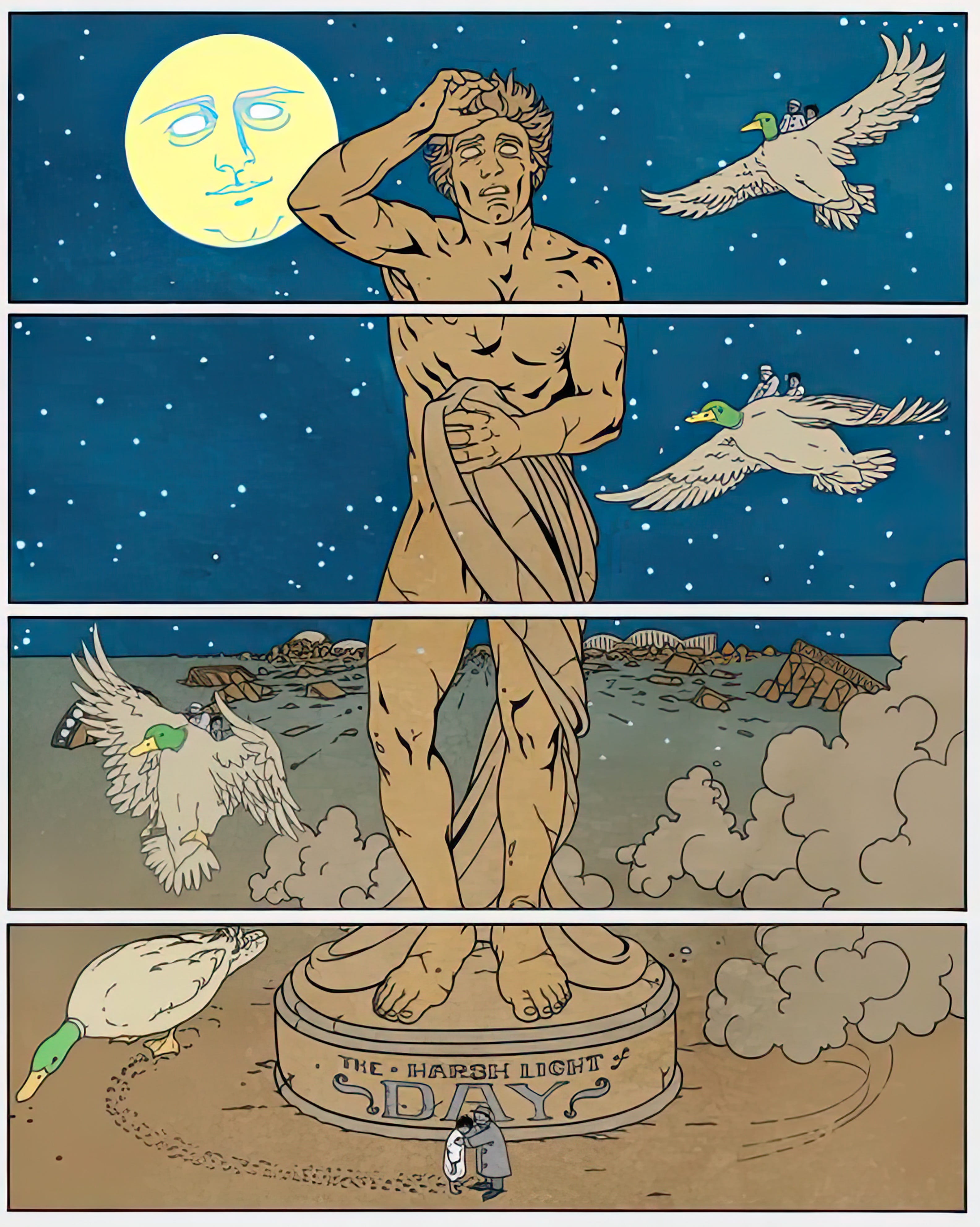
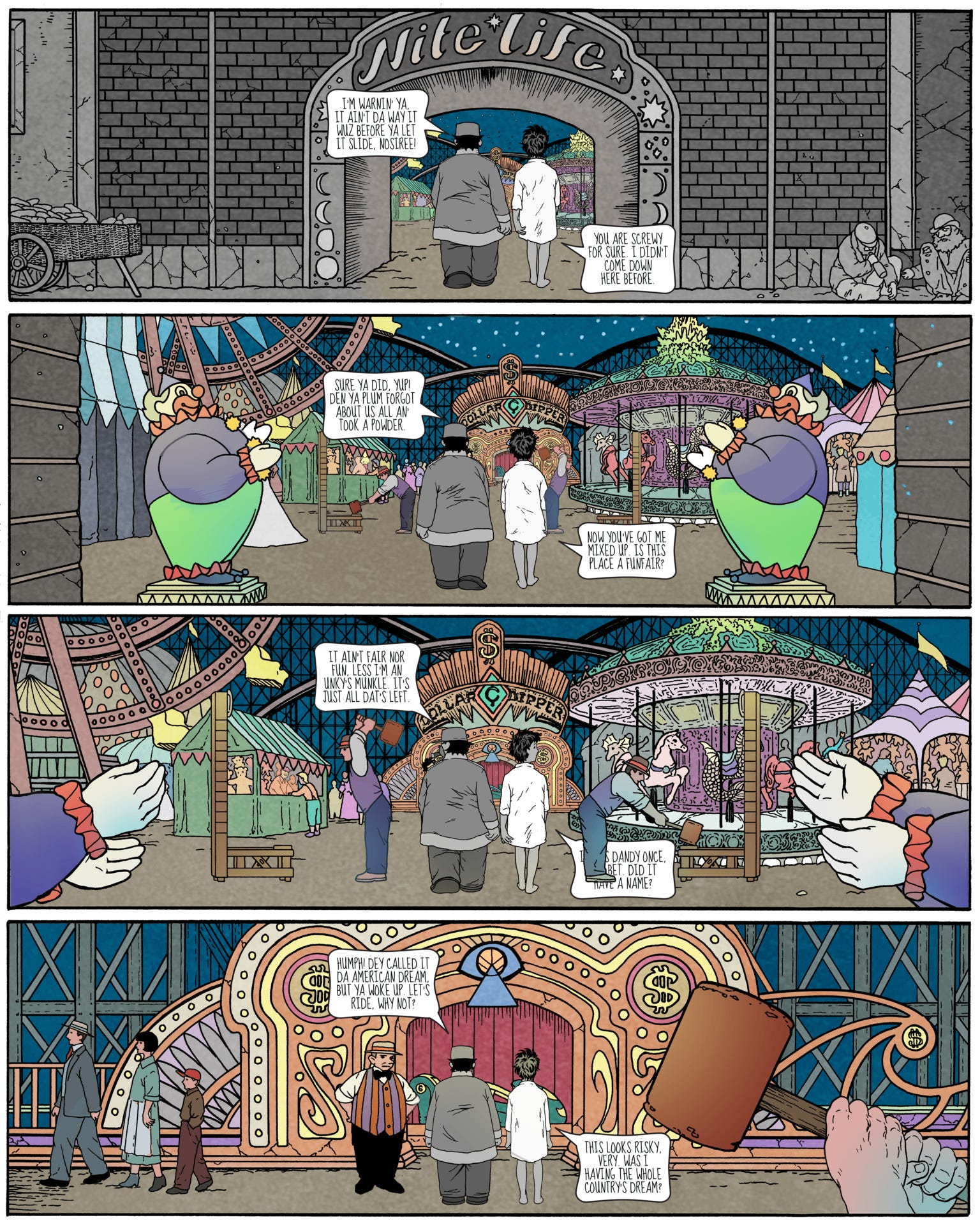
Art from BIG NEMO, a digital motion comic. Story by Alan Moore. Pen and ink by me. Colors by Jose Villarubia. Letters by Erica Shultz
Published by Electricomics.
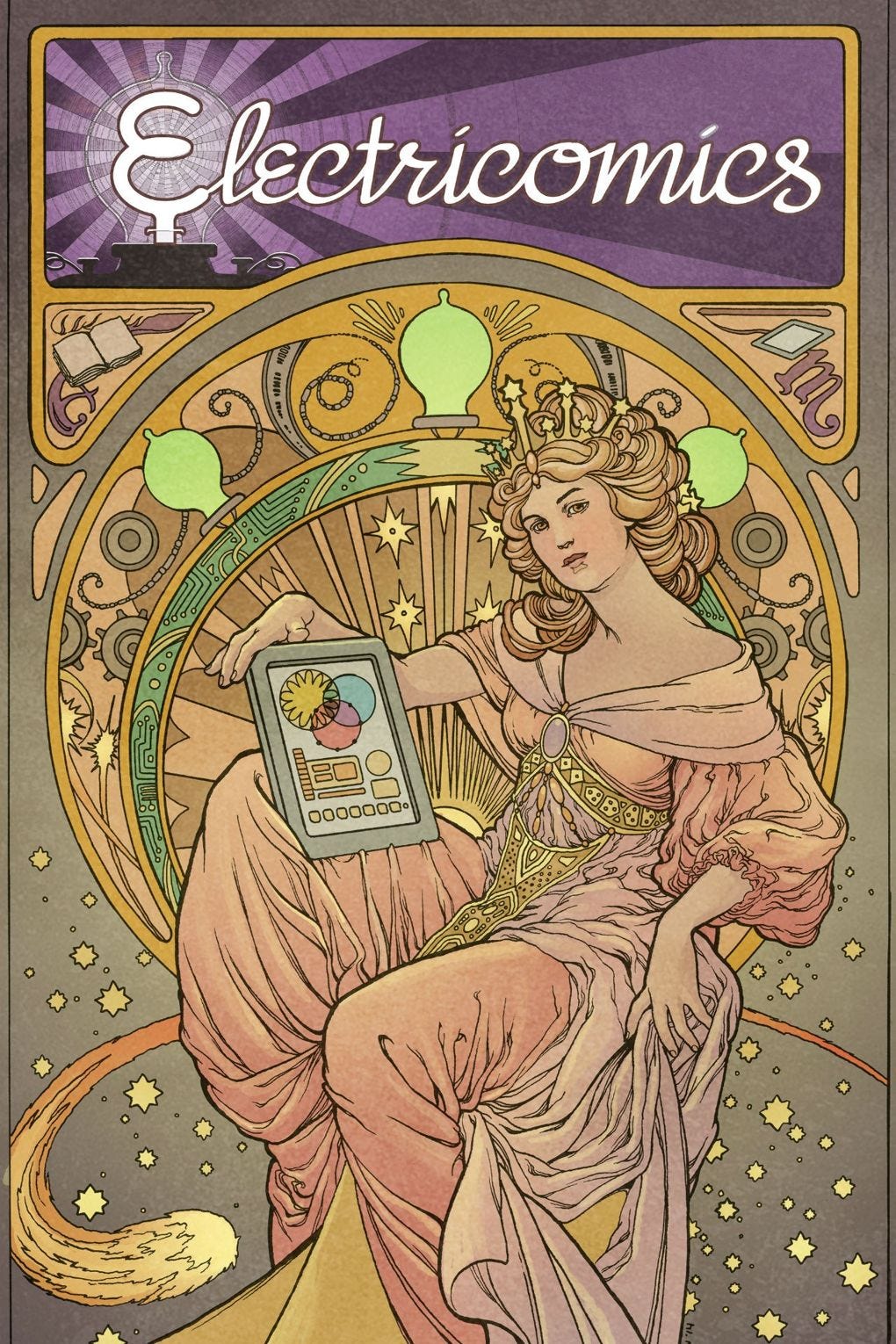
This is exactly how I feel when I see people saying you need to have a Creative Writing degree in order to be able to write properly.
As a person who went to one of the now closed art schools, I was indeed fortunate to have the money and to work in the field for 6 years. The school gave me exposure to new softwares and I met some good friends, most of whom are NOT in art fields or who have left. But, I hit a wall in my career and salary, so switched to engineering. Fortunately, the engineering paycheck helps support my current art, but I would love to get back into art - working on that. BUT, I'm too dependent on the size of my engineering paycheck to fully commit to art full time.